







The labor market for car technicians is empty, and your business will not change that. What it can change is four things: whether it trains its own people, how predictable the end of the day is, what gets worked with in the garage, and what condition a job is in when it reaches the lift. Those four decide whether somebody applies and whether they are still there after four weeks.
Everything has been said about the shortage. You notice it in the same place every year: the vacancy is open for eight weeks, three people respond, two of them do not fit, and the third drops out during the probation period. Another article about the shortage helps you at none of those three points.
The more interesting question is the other one: why does a technician who could work anywhere choose a garage with seven people — and why do they stay? The answers are unspectacular and almost all of them lie inside your business, not in the market. They cost money or discipline, usually discipline.
Four levers that are yours
A business with two to twenty people changes neither the market nor the manufacturers' pay levels. Four things it can change, and they differ sharply in what they cost and how quickly they work.
| Lever | What it costs | When it starts working |
|---|---|---|
| Training your own | years of lead time, an allowance, your best person's time | from the third year, permanently thereafter |
| The working-time model | planning discipline, no investment | immediately, already in the job advert |
| Tools and access | an ongoing budget, every year again | on the trial day, not in the interview |
| Quality of the handover | time at intake | noticeable from the second week |
What stands out is the middle column. Two of the four levers cost no money but consistency — and precisely those are the ones most often named in conversations with candidates who dropped out. Think only about the salary and you are playing on the one field where a small business structurally loses.
The shortage is not really your problem. Your problem is that the one who did apply is gone again after four weeks.
Training is the only supply you make yourself
Every other route takes on somebody another business trained. That works as long as enough people are being trained — and that is exactly where the arithmetic has not added up for years. If you need a qualified technician in five years, you take on an apprentice in eighteen months.
The training takes years, and that sounds like a lot of lead time until you set it against the alternative: an unfilled position does not cost you a few years once, it costs you every year again the turnover the people who are there cannot take on.
Two points are systematically underestimated. First, the share you keep after the training is the real lever, not the number you train: a business that trains and then holds on to nobody has worked for the competition. Second, an apprentice in the later years is long since productive — they are not a pure investment but carry a good part of themselves, provided their work reaches the job sheet in full.
That is where it often goes wrong. If the hours and the parts an apprentice handled never land on the invoice, training looks more expensive than it is. What quietly disappears there is a calculation to do once a year with your own figures.
Working hours are the argument a group cannot copy
A large dealership can outbid you on pay. On the rota that is harder, because opening hours, shift models and rules are set from above. A business with eight people can decide that it finishes at two on a Friday — and stick to it.
The legal framework for that is tighter than many people think and at the same time more flexible. Look up three things for your country before you promise anything:
- The maximum daily working time and over what period a longer day has to be averaged back down. That averaging is the room in which every alternative model is built.
- The minimum rest period between the end of one shift and the start of the next. This is the rule that gets in the way of four-day weeks and late Saturdays first.
- What applies to Saturdays and Sundays and whether compensation has to go with them. A Saturday shift you check up on only after promising it is the most expensive way to find out.
From that framework you can build models a candidate understands immediately: a fixed four-day week with longer days, staggered start times so not everyone is at reception at once, or a flexible margin around a core period. What you promise you have to keep — a model that collapses at the first seasonal peak does more damage than no model; it only holds as long as the appointment planning prices that peak in beforehand.
Related articles
Tools and access: what a technician measures your business by
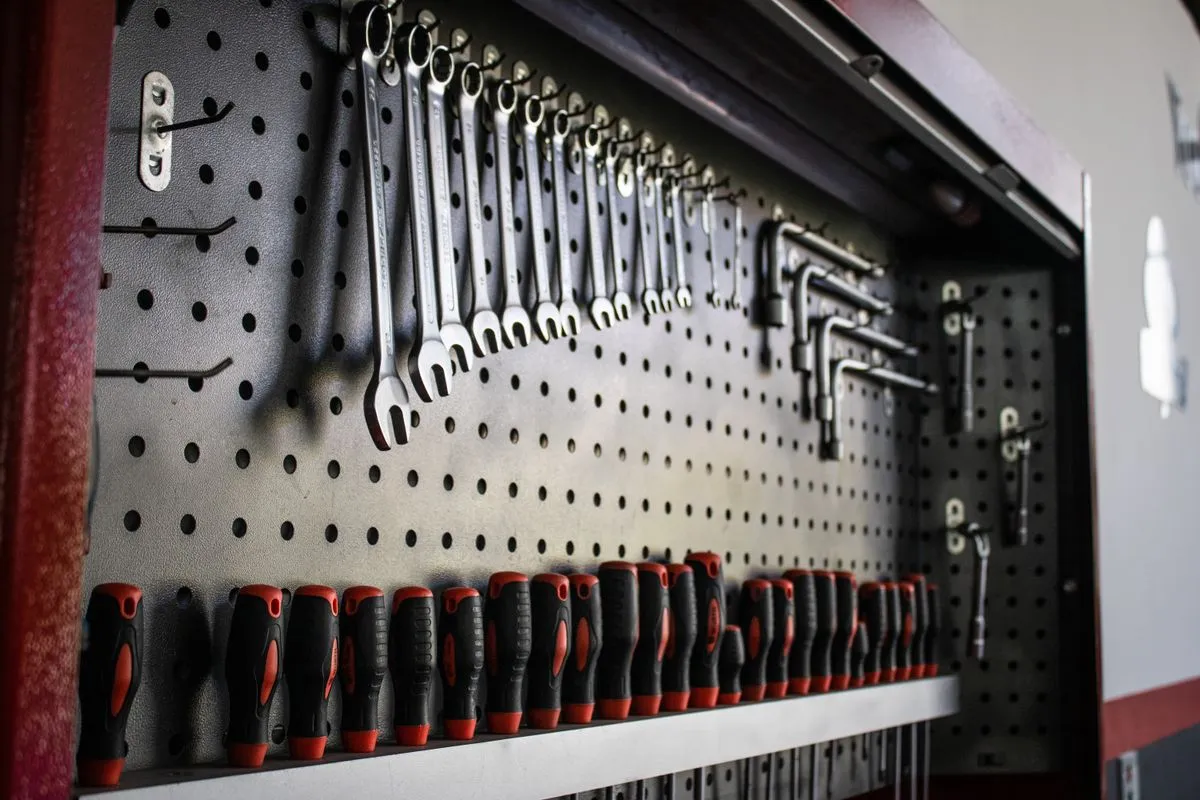
A good technician does not need twenty minutes in your garage to know how the work gets done here. They see whether the diagnostic equipment is current, whether the lift runs reliably, whether tools come back, and whether somebody pays for manufacturer access or whether you ask around for it.
That is not vanity but their basis for working. Anyone working on a current vehicle without access to the manufacturer's information spends the day searching instead of repairing — and that is the most commonly named reason from people who left a small business again.
Where a tight budget saves most expensively
- Diagnostics and manufacturer access. The question is not whether you can afford them but which work you simply have to turn away without them.
- Lifts per person. Two technicians on one lift means one is standing waiting. That appears in no statistic, but it appears sentence by sentence in every second resignation.
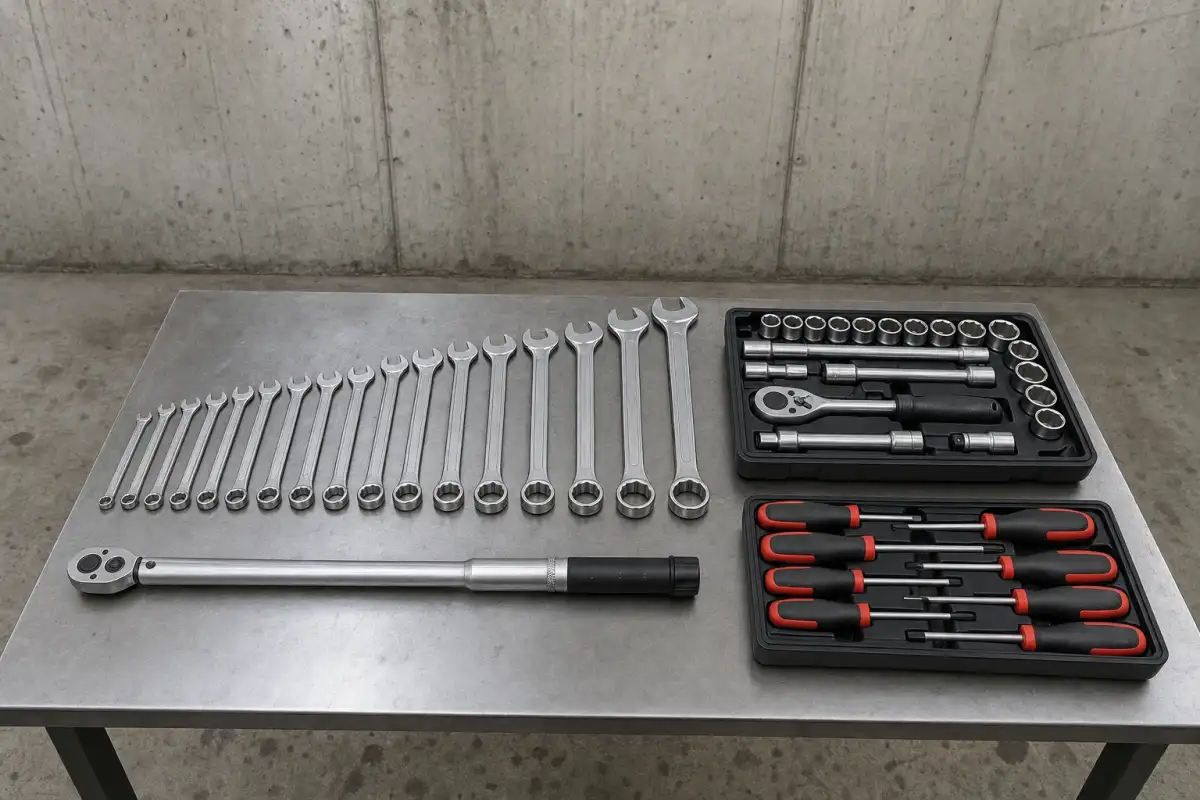
- Special tools for what comes up often. What you need three times a year you hire. What you need every week you buy.
- Order in the store. Search time is paid time nobody can invoice — and it comes out of the day of whoever is searching.
Whether a purchase pays for itself is a calculation about your labor rate, derived from your costs and your productive hours, and about the number of hours the purchase frees up or makes possible at all. The labor rate calculator shows how much productive time it has to produce for that.

The handover at the counter decides the day on the garage floor
The point that varies most between businesses and appears in no job advert: what condition does a job arrive in on the garage floor? Does it say what the customer described, what was agreed, what specification the vehicle has, where the parts are? Or does it say: makes a funny noise?
A technician who has to walk back twice per job and call the customer once loses more than time. They lose control of their day — and that is the factor people name first in an exit conversation, well ahead of the salary.
A proper handover needs no big package but a fixed order: take down the customer's words verbatim, record the agreed scope, record the cost frame, sort out parts availability before the vehicle goes on the lift. What of that is binding and what is not belongs to the agreements you make with the customer and is a subject of its own. How that order can be recorded on the job sheet is what the garage software shows.
What actually gets read in a job advert
Candidates filter in this order: working hours, pay, equipment. Everything else they read only once those three are right. An advert that opens with a family-like team and challenging duties while saying nothing about the hours gets skipped by exactly the people you are looking for.
Write down what is there instead: the weekly hours and how they fall, whether there is Saturday work and in what rhythm, what diagnostic equipment is in the building, how many lifts there are for how many technicians, what training is included in the first year. A salary range costs you less than eight weeks without a response.
Trial days: where the boundary lies
A trial day is a sensible instrument; both sides see more than in two interviews. It is unpaid only as long as it stays a genuine look around: watching, asking questions, without being absorbed into the work process and without being given instructions. The moment the candidate works productively it is employment with everything that goes with it — pay and registration included, regardless of what the piece of paper says. Sort the insurance out beforehand, not afterwards: who to go to for that is something your insurance adviser or your trade association knows.
You change nothing about the market, but you do change four things in your own business. If you tackle only one of them this year, take the handover at the counter: it costs no investment, works within two weeks, and is at the same time the reason people leave again. Advertise the apprenticeship for two years' time anyway — that lever has the longest lead time and is the only one that carries permanently.
Running the garage without paperwork?
Jobs, labor units, parts and invoices in one system. From drop-off to the invoice, every line comes from the job.