








Table of contents
Rework costs the hour a second time, plus the customer's journey and a piece of their trust. Most of it can be prevented by one fixed step at the end of every job: a check against a list, not against a feeling. Five minutes, always the same points, recorded.
The resistance to it is understandable. Anyone who has been changing brakes for twenty years experiences a checklist as distrust. Only the list is not aimed at skill — it is aimed at interruption. Mistakes almost never happen at the difficult part of the work but at the last move after the phone call.
So the final check is first of all an organisational question: who does it, when, and how does the next person know it happened. Without those three answers it stays a good intention.
What rework actually costs
The obvious calculation is the time: the work is done a second time and not paid for a second time. Underneath it lie three items that weigh more.
- The capacity crowded out. The returning vehicle gets a slot that was already sold — usually at short notice, and therefore at the expense of a planned job.
- The interruption. A complaint stops work that is under way, and it is an experienced colleague's work, because nobody else deals with it.
- The trust. A customer who has to come a second time tells people. They also tell them how you handled it, and that is the only part you can still influence afterwards.
Nobody knows what the share is in your shop without measuring. A tally sheet over eight weeks is enough: one column for vehicles coming back about the same thing, one for internal rework caught before collection. The second figure is the more interesting one, because it shows how much your check is already catching.
Mistakes do not happen at the difficult part of the work. They happen at the last move after the interruption.
The final check as a fixed step
A check that happens when there is time does not happen when it is most needed. So it needs a fixed place in the routine — between "finished" and "ready for collection" — and a visible record.
When there are two or more of you
A second pair of eyes is the most effective mechanism there is here, because the person checking does not share the expectations of the person who did the work. Whoever did it sees what they did; whoever did not sees what is there. Time required: a few minutes, with a clear rule about who checks whom.
When you work alone
Then distance replaces the second pair of eyes. You check not immediately after the last move but after a break or after the test drive — and strictly against the list, because the list does what the second colleague would do: it asks about the things you are not thinking about right now.
In both cases the record is the same small thing: initials and time on the job sheet. That takes five seconds and answers two questions later — whether it was checked, and by whom.
What belongs on every list
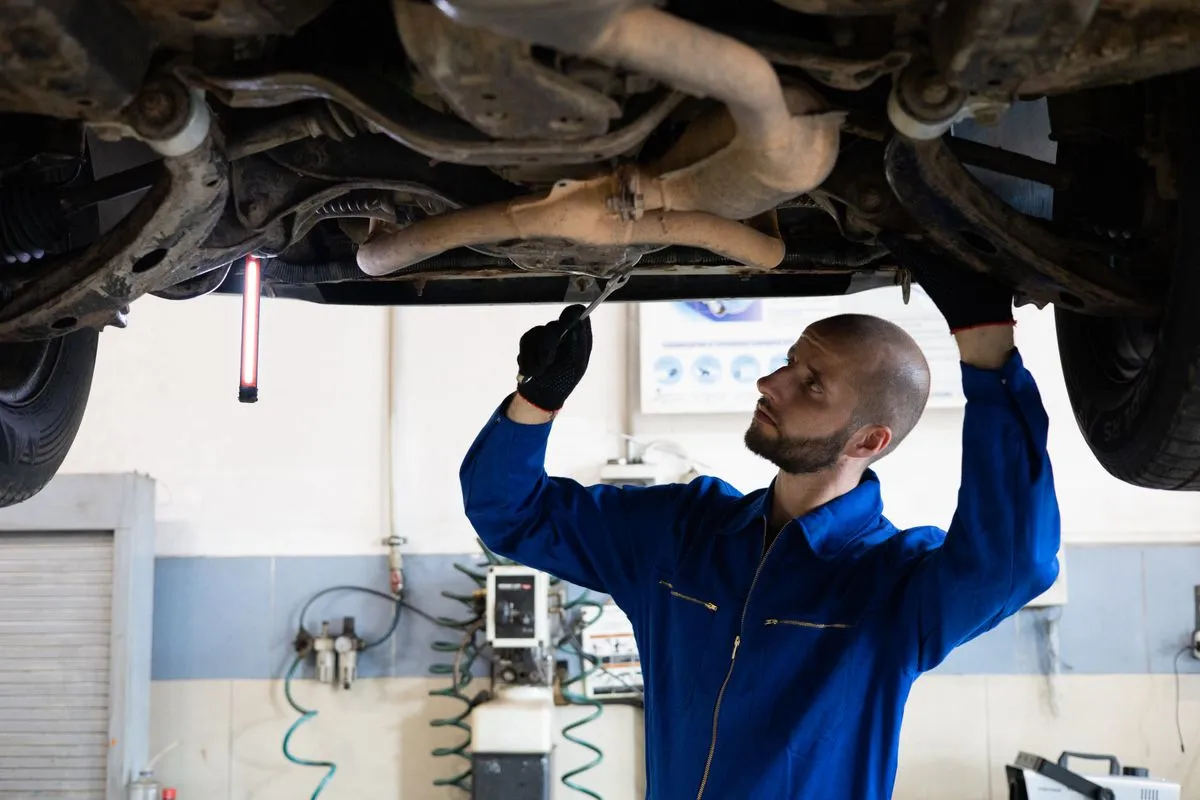
The list is short and always the same. It does not replace a professional check of the work done; it catches the moves that get forgotten at the end.
| Check | Why it belongs on the list |
|---|---|
| Wheel fasteners with a torque wrench | Safety-critical, and the point at which an interruption gets most expensive. Torque to the manufacturer's figure. |
| Fluid levels after the work | Oil, coolant, brake fluid — checked after the test drive, not before it. |
| Warning lights out, fault memory checked | A light the customer sees as they pull away undoes every bit of good work. |
| Service indicator reset | Frequently forgotten and the classic reason for a second appointment. |
| Nothing left in the engine bay or the cabin | Tools, rags, packaging — the look takes ten seconds. |
| Protective covers and films removed | For the customer the first visible sign of whether the work was done cleanly. |
| Tyre pressures, including the spare | Costs nothing and is regularly overlooked on wheel work. |
| Everything ordered actually done | The job sheet is read back item by item — not from memory. |
After work on the wheels, the advice to have the fasteners re-torqued after a short distance belongs with it. What distance applies is in the manufacturer's specification; give the advice in writing rather than mentioning it as you hand over the keys — if something happens, it counts towards the question of who is liable.
Add the points that actually go wrong in your shop — and delete what never happens. A list with thirty points gets ticked without being looked at; one with eight gets read.
Related articles
The test drive
On every repair that affects how the vehicle behaves, the test drive is part of the check and not an extra. Three points make it useful:
- The same route. A fixed loop with a built-up section, an open road and somewhere to brake makes results comparable.
- Reproduce the reported symptom. If it "vibrates at speed when braking", the loop has to contain both. Otherwise you are checking that the car drives, not that the fault has gone.
- Note the result. A few words on the job sheet — symptom no longer reproducible — are worth more in a complaint than any memory.
Whether a test drive is permitted belongs on the job sheet, settled with the customer at the point the vehicle is booked in. And if you move a vehicle on trade plates: those are tied to the business's own test, demonstration and delivery journeys and do not cover arbitrary use. What your business holds and what is permitted with it is a question for the registration authority where you operate.
When there is a complaint anyway
Even with a good check, a vehicle comes back. What you do next decides whether it stays a task or becomes a case.
- Take it in without argument. Give an appointment, look at the vehicle, let the customer describe the symptom — again, best in their own words.
- Reproduce it. A test drive with the customer if they can describe it. In half the cases that already settles whether it is the point complained about or a different one.
- Document. What was found, what is being done, at whose cost. Including when you decide to do it as a goodwill gesture.
- Rework and close. With the same final check as any other job.
Legally, claims for defects in work on a thing stay open for a period set by the law where you operate — commonly two years from acceptance, but check yours rather than assuming. What counts within that period is your documentation: the job sheet, the items, the final check, the result of the test drive. Whoever wrote nothing down is negotiating about memories.
Two neighbouring points belong with it. If you credit or correct an invoice because of rework, that never happens by overwriting the original. And a customer withholding payment over an alleged defect is not a case for the dunning process but a matter to be settled first — treating the two the same way is how a solvable disagreement becomes a dispute.
One fixed step between finished and ready for collection, eight points that never change, initials on the job sheet, and for anything affecting how it drives, a test drive on the same loop. A final check needs no more than that, and less is not enough.
If you introduce only one thing, make it the record. As soon as every job sheet says who checked it, the check happens — and after eight weeks you know whether the effort paid off.
Running the workshop without paperwork?
Jobs, labour units, parts and invoices in one system. From drop-off to the e-invoice, with nothing entered twice.